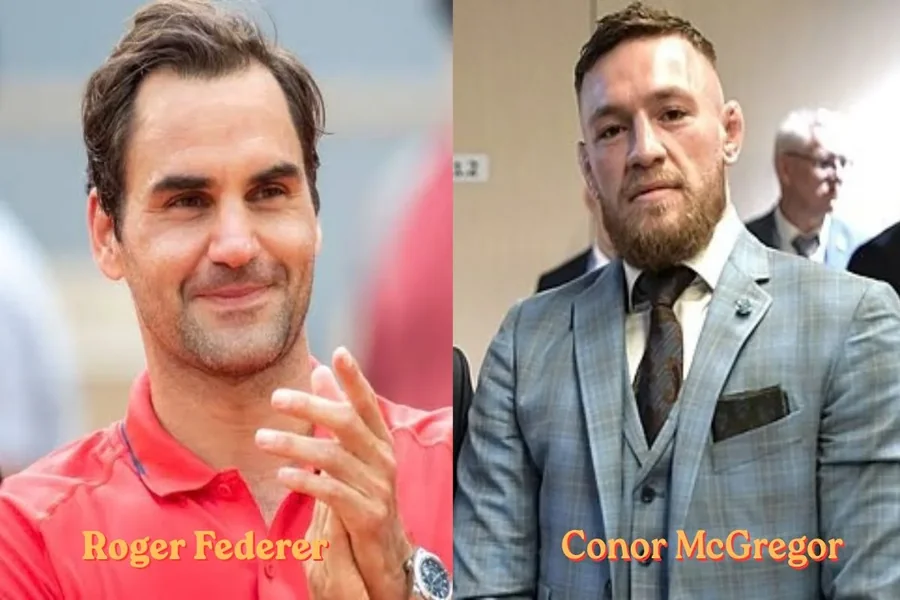
Roger Federer and Conor McGregor: Two Paths to Fame
Roger Federer and Conor McGregor became two of the most recognizable personalities in modern sports. Although they competed in completely different disciplines, both athletes achieved extraordinary success and built international reputations that extended far beyond their sporting careers. Federer became a symbol of elegance and consistency in professional tennis, while McGregor transformed mixed martial arts through his fighting ability, confidence and promotional skills.
Their journeys offer an interesting comparison between two different approaches to sporting greatness. Federer spent more than two decades competing against some of the greatest tennis players in history. His 20 Grand Slam singles titles and 103 ATP titles established him as one of the most successful players of his generation. McGregor followed a different route. His knockout victories and outspoken personality helped him become the first UFC fighter to hold two championship belts simultaneously.
Both men understood the importance of personal identity. Federer attracted audiences through technical excellence and sportsmanship. McGregor gained attention through confidence and entertainment. Their approaches were different but their influence was equally important in changing how modern athletes connect with fans.
Understanding Roger Federer and Conor McGregor requires looking beyond their records. Their childhoods, sporting achievements, rivalries, business activities and personal brands explain why they remain important figures in global sports culture.
Roger Federer: The Man Who Redefined Modern Tennis
Roger Federer was born on August 8, 1981, in Basel, Switzerland. He developed an interest in tennis during childhood and gradually became one of the most talented young players in the country. His professional journey began in 1998 when he entered the international tennis circuit.
Federer did not become a global superstar overnight. His early professional years included difficult matches and moments when his emotions affected his performance. However, his technical ability and determination helped him develop into a more disciplined competitor.
His breakthrough arrived at Wimbledon in 2003. Federer defeated Mark Philippoussis in the final and secured his first Grand Slam singles championship. That victory introduced him to a much wider audience and marked the beginning of an extraordinary period in men’s tennis.
During the following years he dominated major tournaments with impressive consistency. His ability to play effectively on grass and hard courts made him a difficult opponent for almost everyone on the professional tour.
Federer eventually became one of the defining personalities of the Open Era. His combination of technical ability and calmness made him popular with experienced tennis followers and casual sports viewers alike.
Roger Federer’s Early Life and Professional Journey
Federer grew up in Basel and showed an interest in several sports before concentrating on tennis. As a young player he also participated in football. However tennis gradually became his main passion.
His development required more than natural talent. He worked on his movement and shot selection while learning how to control his emotions during difficult matches.
The transition from junior tennis to professional competition was challenging. Young players often need time to adjust to the physical and mental demands of the ATP Tour. Federer experienced similar difficulties before finding the consistency required to compete against established professionals.
His first major breakthrough came in 2001 when he defeated Pete Sampras at Wimbledon. The victory was significant because Sampras had dominated the tournament for years. Although Federer did not win the championship that season the match demonstrated his ability to challenge established champions.
Two years later he captured his first Wimbledon title. From that point forward his career developed rapidly.
Federer became particularly dangerous because he could adjust his game according to different opponents. He was comfortable playing from the baseline but could also approach the net and finish points with excellent volleys.
Roger Federer’s Grand Slam Achievements
Grand Slam championships are among the most important measurements of success in professional tennis. Federer won 20 men’s singles Grand Slam titles during his career.
His achievements across the four major tournaments demonstrate his ability to perform on different surfaces.
| Grand Slam Tournament | Titles Won |
|---|---|
| Wimbledon | 8 |
| Australian Open | 6 |
| US Open | 5 |
| French Open | 1 |
| Total | 20 |
Wimbledon became particularly associated with Federer. He won the championship eight times and established himself as one of the tournament’s most successful players.
His first Wimbledon title arrived in 2003. He then won five consecutive championships between 2003 and 2007. Additional victories followed in 2009 2012 and 2017.
His Australian Open performances were equally impressive. Six championships demonstrated his ability to compete successfully on hard courts across different stages of his career.
The French Open presented a different challenge because clay courts demand patience and physical endurance. Federer finally won the tournament in 2009 after defeating Robin Söderling in the final. That victory completed his career Grand Slam.
His 20 major championships represented an important milestone in men’s tennis. He was the first male player to reach that number of Grand Slam singles titles.
Federer’s World Number One Record and Career Statistics
Grand Slam victories were only one part of Federer’s success. His consistency throughout the professional season was another major reason for his reputation.
He spent 310 weeks at the top of the ATP rankings. His record included 237 consecutive weeks as world number one between 2004 and 2008.
Remaining at the top requires more than winning a few important tournaments. Players must maintain their performance across different surfaces and compete successfully against opponents with different playing styles.
Federer also finished five seasons as the year-end number one player. His 103 ATP singles titles placed him among the most successful players in the history of men’s tennis.
The following table summarizes several important achievements.
| Career Achievement | Roger Federer |
|---|---|
| Professional Debut | 1998 |
| First Grand Slam | Wimbledon 2003 |
| Grand Slam Singles Titles | 20 |
| ATP Singles Titles | 103 |
| Weeks at World No. 1 | 310 |
| Consecutive Weeks at No. 1 | 237 |
| Year-End No. 1 Finishes | 5 |
| Olympic Gold | 2008 Doubles |
| Davis Cup | 2014 |
| Retirement | 2022 |
These numbers explain why Federer remained competitive for such a long period. His career was not defined by one successful season but by repeated achievements over more than two decades.
What Made Roger Federer’s Playing Style Special?
Federer’s playing style was one of the most recognizable aspects of his career. He combined powerful shots with excellent movement and an ability to change the rhythm of a match.
His one-handed backhand became a signature feature. It allowed him to create sharp angles and attack shorter balls while maintaining control during difficult rallies.
His forehand was another major weapon. Federer could generate considerable power while maintaining impressive accuracy. He also used changes in pace and spin to prevent opponents from settling into a comfortable rhythm.
Footwork played an important role in his success. He often reached difficult shots without appearing rushed. His balance allowed him to recover quickly and prepare for the next exchange.
Another strength was his ability to move forward. Federer could approach the net and finish points with accurate volleys. This made his game less predictable than that of players who depended mainly on baseline exchanges.
His style also attracted people who did not regularly follow professional tennis. Many spectators appreciated the way he combined athletic ability with controlled movement.
The Big Three Rivalry: Federer, Nadal and Djokovic
The careers of Roger Federer Rafael Nadal and Novak Djokovic became closely connected through one of the greatest periods in men’s tennis.
Together they became known as the Big Three. Their achievements transformed professional tennis and created rivalries that attracted millions of viewers.
Federer and Nadal developed one of the most recognizable rivalries in sporting history. Their playing styles were very different. Federer preferred attacking tennis and frequently used his forehand to control points. Nadal relied on heavy topspin and outstanding defensive movement.
Their matches became especially important at Wimbledon and the French Open. The 2008 Wimbledon final remains one of the most memorable matches in tennis history. Nadal defeated Federer in five sets after a dramatic contest affected by rain delays and changing conditions.
Read More: Misha Ezratti Net Worth: Career, Wealth and GL Homes
Djokovic created another difficult challenge. His exceptional returning ability and movement allowed him to compete successfully against Federer’s attacking style.
Federer and Djokovic played 50 official matches while Federer and Nadal met 40 times. These rivalries pushed all three players to improve their performances.
Their competition also helped attract new audiences to tennis. Fans followed not only individual tournaments but also the continuing story of three champions trying to establish their place in sporting history.
Roger Federer’s Olympic Success and Davis Cup Achievement
Federer’s Grand Slam titles receive most of the attention but his international achievements also deserve recognition.
He represented Switzerland at multiple Olympic Games. His most successful Olympic appearance came at Beijing in 2008 when he won the men’s doubles gold medal alongside Stan Wawrinka.
The pair delivered an impressive performance and defeated Swedish opponents Simon Aspelin and Thomas Johansson in the final.
Federer also won an Olympic singles silver medal at the London Games in 2012. He reached the final before losing to Andy Murray.
Another important achievement came in 2014 when Switzerland won its first Davis Cup title. Federer played a major role in the team’s successful campaign and helped secure an important moment for Swiss tennis.
These achievements show that his career was not limited to individual championships. He also contributed to his country’s success in international team competitions.
Roger Federer’s Business Career and Global Brand
Federer became a commercial success because his reputation extended beyond tennis. His professional attitude and international popularity made him attractive to major brands.
He worked with companies across luxury goods sportswear watches and other consumer industries. His partnerships included Rolex and several internationally recognized brands.
One interesting part of his business journey was his relationship with the Swiss sportswear company On. Federer became an investor and collaborated on developing tennis footwear.
His business activities reflected his public image. Rather than relying entirely on short-term promotional opportunities he developed partnerships that connected with his interests and long-term reputation.
Federer also demonstrated that professional athletes could become successful investors while remaining connected to their original sports.
His commercial influence continued after retirement. Although he no longer competed regularly his name remained valuable in advertising and international sporting events.
Roger Federer Foundation and His Contribution to Education
Federer’s influence also includes charitable activities. The Roger Federer Foundation focuses on improving access to quality early childhood education and learning opportunities for disadvantaged children.
The foundation has worked particularly in southern Africa and Switzerland.
Education is important because it provides children with opportunities to develop skills and improve their future prospects. The foundation supports educational initiatives designed to create better learning environments and strengthen early education systems.
This work adds another dimension to Federer’s legacy. His achievements are not limited to the trophies he won or the records he established.
His charitable involvement demonstrates how an internationally recognized athlete can use public influence to support long-term social projects.
Roger Federer’s Retirement and 2026 Hall of Fame Induction
Federer announced his retirement from professional tennis in September 2022. His final competitive appearance came at the Laver Cup in London.
He played doubles alongside Rafael Nadal. The emotional farewell became one of the most memorable moments in modern tennis because it brought together two great rivals who had developed a strong friendship.
Federer had struggled with knee problems during the final stages of his career. After several operations and rehabilitation attempts he decided that continuing professional competition was no longer realistic.
His retirement did not mean the end of his connection with tennis.
In 2025 he was elected to the International Tennis Hall of Fame Class of 2026. His official induction ceremony took place on August 29, 2026, in Newport Rhode Island.
The recognition placed him among the most important figures in tennis history. His achievements included 20 major titles and 103 ATP singles championships alongside his contributions to the sport outside competition.
His Hall of Fame induction also provided an opportunity to celebrate the people and experiences that shaped his career.
Conor McGregor: The Fighter Who Changed Mixed Martial Arts
Conor McGregor followed a very different path to international fame. Born on July 14, 1988, in Dublin Ireland he became one of the most recognizable personalities in mixed martial arts.
Before becoming a professional fighter McGregor trained in boxing and other combat disciplines. He also worked as an apprentice plumber before deciding to pursue fighting as a full-time career.
His professional MMA journey began in 2008. He competed in regional promotions and gradually developed a reputation for powerful striking and confident performances.
His success in Cage Warriors helped him gain attention from the UFC. He joined the organization in 2013 and quickly became one of its most exciting new competitors.
McGregor stood out because of his fighting ability and his approach to promotion. He regularly used interviews and press conferences to attract attention before major events.
His confidence sometimes created controversy but it also helped him connect with audiences who might not otherwise follow MMA.
Conor McGregor’s Early Career and Road to the UFC
McGregor started his professional mixed martial arts career in 2008. During his early years he competed in European promotions and developed experience against different opponents.
His striking ability became his biggest advantage. He was particularly effective at maintaining distance and using accurate counterattacks.
He eventually joined Cage Warriors where he achieved success in two weight divisions. He won the featherweight and lightweight championships and became one of the promotion’s leading fighters.
This accomplishment helped establish his reputation before entering the UFC.
McGregor made his UFC debut on April 6, 2013. He defeated Marcus Brimage by first-round TKO at UFC on Fuel TV 9.
The performance introduced him to a larger international audience. His confident interviews and aggressive fighting style quickly attracted attention.
He continued winning important fights and moved closer to a championship opportunity.
Conor McGregor’s 13-Second Victory Over José Aldo
One of the most famous moments in McGregor’s career came at UFC 194 in December 2015.
He faced José Aldo for the UFC featherweight championship. Aldo had established himself as one of the strongest fighters in the division and had defended his championship multiple times.
The fight was expected to be a major contest between two elite competitors. However the result arrived much faster than most spectators expected.
McGregor landed a powerful left hand and knocked Aldo out after just 13 seconds.
The victory became one of the fastest championship knockouts in UFC history. It also confirmed McGregor as the undisputed featherweight champion.
The result was important for several reasons. McGregor had spent months promoting the matchup and confidently predicting that he would finish Aldo.
His prediction became reality almost immediately after the opening bell.
The victory also increased his popularity beyond regular MMA audiences and helped establish him as one of the biggest names in combat sports.
Becoming the UFC’s First Simultaneous Two-Division Champion
McGregor reached another historic milestone in November 2016.
At UFC 205 he faced Eddie Alvarez for the lightweight championship. The event took place at Madison Square Garden in New York and attracted considerable international attention.
McGregor controlled much of the contest with accurate striking and strong movement. He eventually defeated Alvarez by second-round TKO.
The victory made him the first fighter in UFC history to hold two championship belts simultaneously in different weight classes.
He already held the featherweight championship and added the lightweight title to his achievements.
This accomplishment strengthened his reputation as one of the most influential fighters of his generation.
It also demonstrated his ability to compete successfully against opponents in different divisions.
McGregor’s two-division achievement remains one of the defining milestones of his career.
Conor McGregor’s Fighting Style and Signature Left Hand
McGregor became famous for his striking ability. His left hand was particularly dangerous and played an important role in several major victories.
He often used movement and distance management to create opportunities for powerful counterattacks.
His stance allowed him to generate force while remaining balanced. He also used precise timing to punish opponents who moved into his preferred striking range.
Another important part of his style was his ability to read opponents. Rather than throwing combinations without a clear plan he frequently looked for specific openings.
His striking was supported by footwork and confidence. These qualities helped him defeat several established competitors.
However mixed martial arts requires more than striking. Fighters must also understand wrestling grappling and submission defense.
McGregor experienced difficulties against some opponents who were able to take him down and control him on the ground. These challenges became an important part of his later career.
The Nate Diaz Rivalry and McGregor’s First UFC Loss
The rivalry between Conor McGregor and Nate Diaz became one of the most memorable stories in UFC history.
Their first meeting took place at UFC 196 in March 2016. McGregor originally expected to face Rafael dos Anjos but the matchup changed after dos Anjos withdrew because of an injury.
Diaz accepted the fight on short notice.
McGregor started aggressively and landed several effective strikes. However Diaz survived the early pressure and began controlling the contest.
He eventually submitted McGregor with a rear-naked choke in the second round.
The defeat was important because it ended McGregor’s winning momentum and showed that even a highly successful striker could face serious challenges against an experienced grappler.
The two fighters met again at UFC 202 in August 2016. This time McGregor won by majority decision after five competitive rounds.
Their rivalry demonstrated McGregor’s ability to learn from a defeat and adjust his approach for a rematch.
The Khabib Nurmagomedov Fight and a Major UFC Rivalry
Another major chapter in McGregor’s career involved Khabib Nurmagomedov.
Their lightweight championship fight took place at UFC 229 in October 2018.
The matchup attracted enormous attention because the rivalry had developed through personal disagreements and intense promotional exchanges.
Inside the Octagon Khabib used his wrestling and grappling ability to control much of the fight. He eventually submitted McGregor in the fourth round with a neck-crank variation.
The result gave Khabib an important victory and exposed some of the difficulties McGregor faced against elite grapplers.
The event also became controversial because an altercation involving members of both teams occurred after the fight.
Despite the result the matchup remains one of the most widely discussed events in UFC history.
Conor McGregor Against Floyd Mayweather in Professional Boxing
McGregor’s popularity was not limited to mixed martial arts.
In August 2017 he entered the boxing ring to face undefeated boxing champion Floyd Mayweather Jr.
The contest attracted worldwide attention because it brought together two major sporting personalities from different combat sports.
Many observers questioned whether McGregor could compete against an experienced professional boxer under traditional boxing rules.
McGregor showed energy during the early rounds and managed to land some punches. However Mayweather gradually controlled the contest with his experience and defensive ability.
Mayweather won by technical knockout in the tenth round.
Although McGregor lost the match it became one of the biggest commercial events in combat sports history. It demonstrated his ability to attract audiences outside the UFC.
The event also showed how modern sporting personalities can create major commercial opportunities through crossover competitions.
Conor McGregor’s Injuries and Long Absence From Competition
McGregor’s later career included several periods away from competition.
His rivalry with Dustin Poirier became particularly important during this stage.
The pair first met in 2014 when McGregor won by first-round TKO. They fought again in January 2021 at UFC 257. This time Poirier won by second-round TKO.
Their third meeting took place at UFC 264 in July 2021. McGregor suffered a serious leg injury during the opening round and the referee stopped the fight following medical intervention.
The injury required surgery and a long rehabilitation process.
His absence lasted approximately five years before he returned to the Octagon in July 2026.
These setbacks affected his competitive momentum and raised questions about how much time he could realistically spend at the highest level of MMA.
Conor McGregor’s 2026 Return Against Max Holloway
McGregor returned to competition on July 11, 2026, at UFC 329 in Las Vegas.
His opponent was Max Holloway. The matchup attracted interest because the fighters had previously met in 2013 when McGregor won by unanimous decision.
Their rematch ended unexpectedly.
McGregor suffered a knee injury during the opening moments of the contest. Holloway was awarded a first-round TKO victory at 1 minute and 9 seconds.
The result brought McGregor’s professional MMA record to 22 wins and 7 losses.
Reports following the fight confirmed that he required surgery for damage to his knee. In November 2026 McGregor said he would prefer Holloway as the opponent for what he expects to be the final fight on his current UFC contract.
He has expressed optimism about returning during 2027. However his recovery and any future fight depend on medical progress and further decisions from the UFC.
This latest chapter is important when assessing his career. His achievements remain significant but his future competitive plans are not yet certain.
Conor McGregor’s Business Ventures and Entrepreneurial Success
McGregor also developed a commercial identity outside professional fighting.
His best-known business venture became Proper No. Twelve Irish whiskey. The brand gained considerable attention because of his international popularity and promotional activities.
The whiskey business demonstrated how an athlete’s public image could support a consumer product.
McGregor also became involved in other commercial activities and promotional projects. His clothing and lifestyle ventures helped strengthen his identity beyond the Octagon.
His business approach relied heavily on personal branding. He used interviews and social media to promote products while connecting his sporting achievements with commercial opportunities.
However business success should be considered separately from sporting performance. An athlete can have a successful commercial career without maintaining the same level of competitive achievement.
McGregor’s career provides a clear example of how modern athletes can become entertainers and entrepreneurs alongside their original sporting roles.
Career Comparison: Roger Federer vs Conor McGregor
Roger Federer and Conor McGregor competed in different sporting environments. Their achievements therefore need to be understood according to the requirements of their respective disciplines.
Federer competed throughout a long tennis season. He had to maintain his ranking and performance across several major tournaments every year.
McGregor competed in scheduled MMA events. His success depended on winning fights and securing championship opportunities within specific weight divisions.
The following table highlights the main differences between their careers.
| Category | Roger Federer | Conor McGregor |
|---|---|---|
| Nationality | Swiss | Irish |
| Birthplace | Basel | Dublin |
| Date of Birth | August 8, 1981 | July 14, 1988 |
| Sport | Tennis | Mixed Martial Arts |
| Professional Debut | 1998 | 2008 |
| Major Achievement | 20 Grand Slam titles | First simultaneous UFC two-division champion |
| Career Titles | 103 ATP singles titles | Two UFC championship belts |
| Signature Skill | One-handed backhand | Powerful left-hand striking |
| Major Rivals | Nadal and Djokovic | Aldo Diaz Poirier and Khabib |
| Major Commercial Activities | Endorsements and investments | Whiskey and other business ventures |
| Retirement Status | Retired in 2022 | Active fighter with future plans uncertain |
| Major Recognition | International Tennis Hall of Fame | UFC history and global MMA influence |
The table demonstrates that their achievements cannot be compared through a single numerical measurement.
Federer built a career based on consistency and championship success over many years. McGregor built his reputation through high-profile victories and his influence on the commercial presentation of MMA.
What Roger Federer and Conor McGregor Have in Common
Despite competing in different sports Federer and McGregor share several important characteristics.
Both became internationally recognized personalities through individual competition. Their performances depended heavily on personal preparation and execution.
They also developed strong identities that made them recognizable outside their sports.
Federer’s elegance and professionalism became part of his public image. McGregor’s confidence and outspoken personality created a different but equally recognizable identity.
Both athletes also understood the commercial value of sporting success.
Federer developed long-term brand partnerships and investment interests. McGregor used his popularity to promote products and build business ventures.
Another similarity is their ability to attract casual viewers. People who do not regularly watch tennis or MMA may still recognize their names.
This crossover appeal helped both athletes become important figures in modern sports culture.
How Federer and McGregor Differ in Personality and Public Image
The differences between these athletes are just as interesting as their similarities.
Federer generally presented himself as a calm and professional competitor. His public image was connected with elegance and sportsmanship.
McGregor followed a more confrontational promotional approach. His press conferences often included bold statements and direct challenges to opponents.
Federer’s popularity developed mainly through sustained performance and a polished personality. McGregor’s popularity grew through a combination of fighting ability and entertainment.
Their communication styles also influenced how fans viewed them.
Federer attracted audiences who appreciated controlled behavior and technical excellence. McGregor attracted audiences who enjoyed confidence and dramatic rivalries.
Neither approach represents a universal formula for success. Both demonstrate that different personalities can connect with international audiences.
Why Fans Compare Roger Federer and Conor McGregor
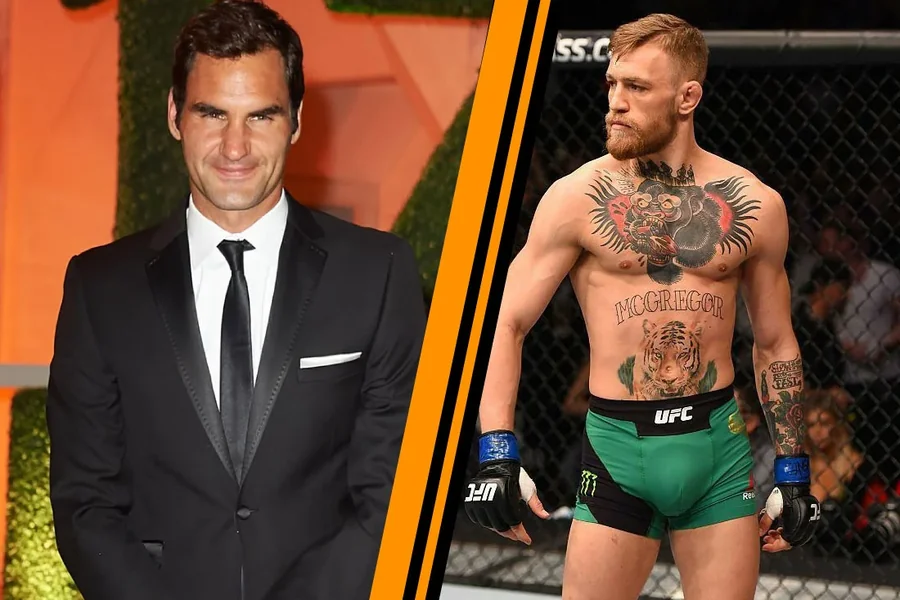
The comparison between Roger Federer and Conor McGregor may appear unusual because tennis and MMA have very different rules and competitive structures.
However their wider sporting influence creates several reasons for comparison.
Global recognition: Both athletes became internationally famous. Their names reached audiences beyond their original sporting communities.
Individual achievements: Federer and McGregor competed in individual sports where personal performance played a major role in success.
Distinct identities: Federer became associated with elegance while McGregor became associated with confidence and showmanship.
Commercial influence: Both converted sporting popularity into business opportunities and international partnerships.
Memorable rivalries: Federer produced historic matches against Nadal and Djokovic. McGregor created major rivalries with Aldo Diaz Poirier and other fighters.
These similarities explain why people continue discussing their careers together.
Who Had the Greater Sporting Legacy?
Deciding whether Federer or McGregor had the greater sporting legacy depends on the criteria being used.
If the comparison focuses on championship statistics and longevity Federer has a stronger case. His 20 Grand Slam singles titles and 103 ATP titles represent an extraordinary record.
His 310 weeks at world number one also demonstrate how consistently he competed at the highest level.
McGregor’s achievements are different. He became the first UFC fighter to hold two championship belts simultaneously. His knockout victory over José Aldo and his successful lightweight championship run remain major moments in UFC history.
He also helped change how MMA events were promoted. His ability to attract attention made him one of the most commercially influential fighters of his generation.
Federer therefore has the stronger argument for sustained sporting excellence. McGregor has a significant argument for promotional influence and cultural impact within combat sports.
The most balanced conclusion is that both achieved greatness through different methods.
The Lasting Influence of Federer and McGregor on Modern Sports
The influence of an athlete is not limited to the number of championships they win.
Federer helped inspire younger tennis players to focus on technical ability and all-court movement. His style also showed that professional tennis could combine athletic power with creativity and control.
His contribution to the sport continued through the Laver Cup and his charitable foundation.
McGregor influenced the business side of combat sports. His promotional approach showed how a fighter could use personality and media attention to increase interest in a sporting event.
He also helped demonstrate the commercial possibilities available to fighters outside traditional competition.
Their careers illustrate two different forms of sporting influence.
One developed through long-term excellence and international respect. The other developed through championship performances and entertainment.
Both remain important examples of how athletes can shape the identity of their sports.
What Young Athletes Can Learn From Their Careers
The careers of Federer and McGregor offer useful lessons for people interested in professional sports.
The first lesson is the importance of developing individual strengths. Federer built his success around technical ability and movement. McGregor developed a striking style that made him dangerous against many opponents.
The second lesson is understanding preparation. Talent alone is rarely enough to reach the highest level. Professional athletes need discipline and the ability to improve their weaknesses.
Another lesson involves personal identity. Both men developed recognizable styles that helped them connect with audiences.
However their careers also show that success requires adaptability. Federer continued improving his game as younger opponents entered the tour. McGregor experienced difficulties when opponents found ways to challenge his striking and control him through grappling.
Young athletes can learn from both examples. Developing strengths is important but remaining open to improvement is equally necessary.
Frequently Asked Questions About Roger Federer and Conor McGregor
Who is more successful between Roger Federer and Conor McGregor?
Roger Federer has the stronger record in terms of championship titles and career longevity. McGregor achieved historic success in MMA and became the UFC’s first simultaneous two-division champion. Their success is best judged within their respective sports.
How many Grand Slam titles did Roger Federer win?
Roger Federer won 20 Grand Slam singles titles. His achievements include eight Wimbledon championships six Australian Open titles five US Open titles and one French Open title.
How many UFC titles did Conor McGregor win?
McGregor won the UFC featherweight and lightweight championships. He became the first fighter to hold two UFC championship belts simultaneously.
Did Roger Federer and Conor McGregor ever compete against each other?
No. Federer competed in professional tennis while McGregor competed in mixed martial arts. They have never faced each other in an official sporting competition.
What is Conor McGregor’s professional MMA record?
McGregor’s professional MMA record stands at 22 wins and 7 losses. His latest fight was against Max Holloway at UFC 329 in July 2026.
When did Roger Federer retire?
Federer announced his retirement in September 2022. His final competitive appearance took place at the Laver Cup in London where he played doubles alongside Rafael Nadal.
Why is Roger Federer considered one of the greatest tennis players?
Federer is considered one of the greatest because of his 20 Grand Slam titles 103 ATP singles titles and 310 weeks at world number one. His playing style and consistency also influenced modern tennis.
What made Conor McGregor famous?
McGregor became famous through his striking ability and major UFC victories. His 13-second knockout of José Aldo and his achievement of holding two UFC championships simultaneously helped establish his international reputation.
Was Conor McGregor successful in professional boxing?
McGregor competed against Floyd Mayweather Jr. in August 2017. He lost by tenth-round technical knockout but the event attracted worldwide attention and became a major commercial success.
Is Conor McGregor planning to fight again?
As of November 2026 McGregor has expressed interest in returning during 2027. He has also identified Max Holloway as his preferred opponent for what he expects to be the final fight on his current UFC contract. His return will depend on recovery and future arrangements.
Final Thoughts
Roger Federer and Conor McGregor represent two different versions of sporting greatness. Federer built his legacy through technical excellence and remarkable consistency while McGregor changed MMA promotion through championship success and an unmistakable personality. Their careers demonstrate that global recognition can come from different approaches. Although Federer has the stronger record in terms of longevity and major titles both athletes have made lasting contributions to modern sports. Their achievements continue to inspire discussions about talent and personal branding.

Shoaib is a passionate digital creator, blogger, and SEO enthusiast who shares insights about AI tools, blogging, online earning, content strategies, and website growth. Through practical guides and creative ideas, Shoaib helps beginners and creators build successful online platforms and stay updated with the latest digital trends.