
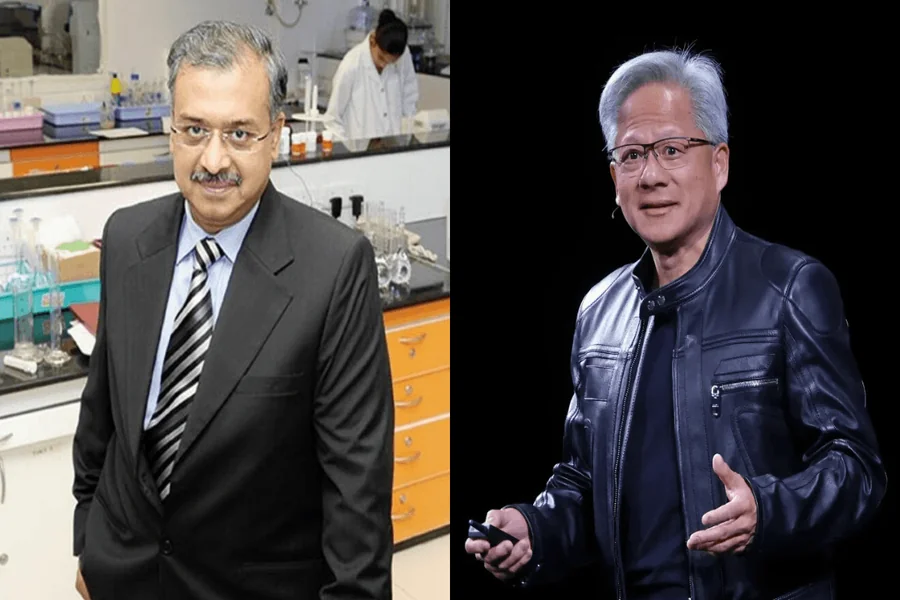
Dilip Shanghvi and Jensen Huang: Two Business Icons
Introduction to Dilip Shanghvi and Jensen Huang
Dilip Shanghvi and Jensen Huang are two influential business leaders who have transformed their respective industries through long-term vision, innovation and strategic decision-making. Although they operate in completely different business environments, their professional journeys demonstrate how determination and consistent leadership can turn ambitious ideas into globally recognized companies.
Dilip Shanghvi is the founder and Executive Chairman of Sun Pharmaceutical Industries. He started the company in India in 1983 and gradually developed it into one of the world’s leading pharmaceutical businesses. His success comes from understanding the healthcare market and identifying opportunities in specialized medicines and international expansion.
Jensen Huang is the co-founder, President and CEO of NVIDIA. He established the technology company in 1993 with two partners. Initially focused on graphics processing technology, NVIDIA eventually became a major force in artificial intelligence and accelerated computing. Its graphics processing units have become essential components of modern AI infrastructure.
Both entrepreneurs have maintained important leadership positions in their companies for decades. However, their approaches to business development reflect the unique requirements of their industries. Shanghvi focused on pharmaceutical manufacturing, acquisitions and research-driven healthcare products. Huang concentrated on semiconductor innovation, computing architecture and software ecosystems.
Their stories are particularly interesting because they demonstrate two different ways to build a successful global business. One transformed access to medicines while the other helped shape the future of computing. Understanding their backgrounds and achievements provides valuable lessons about entrepreneurship and modern corporate leadership.
Who Is Dilip Shanghvi?
Dilip Shanghvi is an Indian entrepreneur best known for founding Sun Pharmaceutical Industries. He was born on October 1, 1955, in Amreli, Gujarat, India. His journey into the pharmaceutical industry began through his family’s involvement in the medicine distribution business.
Rather than following a traditional corporate career, Shanghvi recognized an opportunity to establish his own pharmaceutical manufacturing company. In 1983, he founded Sun Pharma with financial support from his father. According to Forbes, he borrowed approximately $200 to begin the business.
The company initially concentrated on producing medicines for psychiatric conditions. This specialized approach allowed it to establish a presence in a market where focused product development could create meaningful opportunities.
During its early years, Sun Pharma gradually expanded its manufacturing capabilities and product portfolio. Shanghvi focused on building a sustainable organization rather than pursuing immediate popularity. His business decisions reflected patience and an understanding of the pharmaceutical industry’s long development cycles.
As the company grew, it entered additional therapeutic categories and expanded beyond the Indian market. Strategic acquisitions also played an important role in its development. The acquisition of Taro Pharmaceutical Industries and the major purchase of Ranbaxy Laboratories helped strengthen its international position.
Today, Sun Pharma operates across numerous international markets and maintains a broad portfolio of generic and specialty medicines.
Shanghvi is also known for maintaining a relatively private lifestyle. Unlike some prominent business personalities, he generally keeps his personal activities away from public attention.
His achievements have received significant recognition. In 2016, the Indian government awarded him the Padma Shri for his contribution to trade and industry.
He continues to influence Sun Pharma as its Executive Chairman and remains an important figure in India’s pharmaceutical industry.
Who Is Jensen Huang?
Jensen Huang is a Taiwanese-born American entrepreneur and technology executive. He is widely recognized as the co-founder, President and CEO of NVIDIA, one of the most influential companies in the semiconductor and artificial intelligence industries.
Huang was born on February 17, 1963, in Taiwan. During his childhood, his family moved between countries before he eventually settled in the United States.
His educational background played an important role in shaping his career. He earned a bachelor’s degree in electrical engineering from Oregon State University and later completed a master’s degree in electrical engineering at Stanford University.
Before establishing NVIDIA, Huang gained professional experience at Advanced Micro Devices and LSI Logic. These positions helped him develop a strong understanding of semiconductor technology and computer hardware.
In 1993, Huang co-founded NVIDIA with Chris Malachowsky and Curtis Priem. The company initially focused on graphics processing technology for computers and gaming applications.
One of NVIDIA’s most important developments came in 1999 when it introduced the GPU. This technology transformed computer graphics and eventually opened opportunities beyond traditional gaming.
Over time, NVIDIA expanded into professional visualization, scientific computing, data centers and artificial intelligence. Its CUDA computing platform also helped developers use GPUs for a wider range of computational tasks.
The growth of generative AI created another major opportunity for the company. Modern AI systems require substantial computing resources to train and operate. NVIDIA’s hardware and software platforms became important tools for businesses and researchers working in this area.
Huang’s leadership has been central to this transformation. He continues to guide NVIDIA’s long-term direction and remains one of the most recognizable executives in the global technology industry.
Dilip Shanghvi and Jensen Huang: Key Differences and Comparison
Although both entrepreneurs built internationally recognized companies, their professional backgrounds and business models are considerably different.
Shanghvi established his reputation through pharmaceutical manufacturing and healthcare expansion. Huang developed his career around semiconductor engineering and advanced computing.
The following table highlights some of the most important differences between the two business leaders.
| Category | Dilip Shanghvi | Jensen Huang |
|---|---|---|
| National background | Indian | Taiwanese-born American |
| Date of birth | October 1, 1955 | February 17, 1963 |
| Main company | Sun Pharmaceutical Industries | NVIDIA |
| Industry | Pharmaceuticals and healthcare | Semiconductors and technology |
| Founded company | 1983 | 1993 |
| Professional role | Executive Chairman | President and CEO |
| Main business focus | Medicines and pharmaceutical research | GPUs and accelerated computing |
| Major achievement | Building a global pharmaceutical company | Transforming NVIDIA into an AI computing leader |
| Leadership approach | Strategic growth and acquisitions | Technical innovation and long-term investment |
| Major recognition | Padma Shri in 2016 | Numerous international technology and business awards |
An important similarity is their commitment to long-term business development. Neither entrepreneur built a global company overnight. Both spent decades developing products, strengthening operations and responding to changes in their industries.
Their differences are equally important. Pharmaceutical companies must address manufacturing standards, clinical research, regulatory requirements and patient needs. Semiconductor companies must continually improve computing performance and develop technologies that support increasingly demanding applications.
These differences explain why their business strategies are not identical. Nevertheless, both demonstrate the importance of understanding an industry’s future direction before investing in its growth.
There is no established direct business partnership or personal relationship between Shanghvi and Huang. Their names are compared because of their achievements as founders and their influence on different global industries.
How Dilip Shanghvi Built Sun Pharma Into a Global Company
The growth of Sun Pharmaceutical Industries is one of the most notable entrepreneurial stories in India’s healthcare sector.
When Shanghvi established the company in 1983, its operations were considerably smaller than those of the major pharmaceutical businesses operating today. Instead of immediately competing across every medicine category, the company concentrated on selected therapeutic areas.
This strategy allowed Sun Pharma to develop expertise and establish a foundation for future expansion.
One important factor behind its success was its focus on specialized pharmaceutical products. Shanghvi understood that a company could build a competitive advantage by developing strong capabilities in particular treatment categories.
As the business expanded, acquisitions became an important part of its growth strategy.
The purchase of Taro Pharmaceutical Industries strengthened Sun Pharma’s international operations. The acquisition of Ranbaxy Laboratories in 2015 for approximately $4 billion was another major milestone. It significantly increased the company’s scale and expanded its international presence.
Sun Pharma also continued investing in research and development. Its focus gradually expanded beyond traditional generic medicines toward specialty and innovative pharmaceutical products.
This transition is important because specialty medicines often involve more complex research and development processes. They can also require specialized manufacturing and distribution capabilities.
The company has continued to pursue international opportunities through acquisitions and product development. Its acquisition of U.S.-based Checkpoint Therapeutics in 2025 was another example of its interest in expanding its specialty oncology portfolio.
Shanghvi’s business philosophy emphasizes calculated risk and incremental development. In a 2025 McKinsey interview, he discussed the importance of balancing innovation with resilience and building a collaborative organization.
His experience demonstrates that successful expansion does not always require dramatic changes. Consistent improvements and carefully selected opportunities can create significant long-term value.
How Jensen Huang Transformed NVIDIA Through Innovation
Jensen Huang’s business journey offers a different perspective on building a global company. His success is closely connected to NVIDIA’s ability to anticipate changes in computing technology.
When NVIDIA was founded in 1993, computer graphics represented an important opportunity. The growing gaming market created demand for faster and more capable graphics processing hardware.
Huang and his co-founders recognized that specialized processors could improve the way computers handled complex visual information.
The introduction of the GPU in 1999 represented a major turning point. Graphics processing units were designed to perform many calculations simultaneously. This capability eventually made them useful for scientific research and other computational applications.
However, NVIDIA’s transformation did not happen automatically. The company needed to invest in software development and create an ecosystem that allowed developers to use its hardware for different purposes.
CUDA became an important part of this strategy. It enabled developers to use NVIDIA GPUs for general-purpose parallel computing rather than limiting them to graphics-related tasks.
This development helped position NVIDIA for opportunities in artificial intelligence.
As machine learning and deep learning advanced, researchers increasingly needed powerful computing systems to process large amounts of data. NVIDIA’s GPU technology provided an important foundation for these workloads.
The growth of generative AI created even greater demand for specialized computing infrastructure. Companies developing large AI models began investing heavily in GPUs, networking equipment and related software platforms.
NVIDIA expanded its business to support these requirements through data center products and integrated computing systems.
Huang’s leadership philosophy has consistently emphasized innovation and long-term investment. He has encouraged the company to prepare for technological changes even when the commercial opportunities are not immediately clear.
His journey shows how a company can move beyond its original product category by identifying new applications for existing technology and investing in future capabilities.
Leadership Styles and Business Lessons From Both Entrepreneurs
Dilip Shanghvi and Jensen Huang demonstrate two different but valuable approaches to business leadership.
Shanghvi is known for his measured decision-making and strategic approach to corporate expansion. His development of Sun Pharma involved identifying opportunities in pharmaceutical markets and building a business capable of competing internationally.
He has also demonstrated the importance of selecting the right acquisition opportunities. Buying another company can increase market access and expand a product portfolio. However, successful acquisitions require careful planning and integration.
Huang’s leadership is more closely associated with technological innovation and engineering-driven development. NVIDIA has consistently invested in new computing architectures and software platforms.
His approach shows why companies in rapidly changing industries must remain willing to challenge existing business models.
Despite their differences, several important lessons can be learned from both entrepreneurs.
Long-Term Vision Matters: Both leaders developed their companies over several decades. Their achievements demonstrate the importance of maintaining a clear direction instead of focusing exclusively on short-term results.
Understand Your Industry: Shanghvi identified opportunities in specialized medicines while Huang recognized the growing importance of accelerated computing. Understanding market needs helped both entrepreneurs make strategic decisions.
Invest in Innovation: Businesses cannot rely entirely on past achievements. Continuous research and product development help organizations remain competitive.
Build Strong Teams: Large companies require experienced professionals who can manage different responsibilities. Leadership involves developing an organization that can operate effectively beyond its founder.
Adapt to Market Changes: Both entrepreneurs adjusted their business strategies as new opportunities emerged. Their experiences show that flexibility is essential for sustainable growth.
These lessons are relevant to entrepreneurs in many industries. A small business may not have the financial resources of Sun Pharma or NVIDIA, but it can still apply the principles of strategic planning, innovation and responsible growth.
Frequently Asked Questions About Dilip Shanghvi and Jensen Huang
1. Who are Dilip Shanghvi and Jensen Huang?
Dilip Shanghvi is an Indian entrepreneur and the founder of Sun Pharmaceutical Industries. Jensen Huang is a Taiwanese-born American technology entrepreneur who co-founded NVIDIA. Both are recognized for building globally influential companies.
2. Are Dilip Shanghvi and Jensen Huang business partners?
There is no publicly established business partnership between them. They lead companies in different industries and are generally compared because of their entrepreneurial achievements.
3. What companies did Dilip Shanghvi and Jensen Huang establish?
Dilip Shanghvi founded Sun Pharmaceutical Industries in 1983. Jensen Huang co-founded NVIDIA in 1993 alongside Chris Malachowsky and Curtis Priem.
4. What industries do Dilip Shanghvi and Jensen Huang represent?
Shanghvi represents the pharmaceutical and healthcare industry. Huang represents the semiconductor and technology industries with a particular focus on GPUs and artificial intelligence computing.
5. What is Dilip Shanghvi famous for?
He is best known for transforming Sun Pharma from a relatively small pharmaceutical business into a major international healthcare company. His strategic acquisitions and focus on specialty medicines contributed significantly to its growth.
6. What is Jensen Huang famous for?
Huang is famous for co-founding NVIDIA and helping transform the company into a global leader in GPU technology and accelerated computing. His leadership has played an important role in the development of AI infrastructure.
7. Which companies are larger: Sun Pharma or NVIDIA?
NVIDIA has a substantially larger stock market valuation because of its position in the global semiconductor and AI markets. Sun Pharma is also a major international pharmaceutical company. Their revenue models and industry structures are very different.
8. What awards have Dilip Shanghvi and Jensen Huang received?
Shanghvi received India’s Padma Shri in 2016 for his contribution to trade and industry. Huang has received several technology and leadership honors including the Robert N. Noyce Award and IEEE Founder’s Medal.
9. What can entrepreneurs learn from Dilip Shanghvi and Jensen Huang?
Entrepreneurs can learn the importance of long-term planning, innovation, market research and calculated risk-taking. Both leaders demonstrate that sustainable business success requires continuous improvement and the ability to adapt to changing market conditions.
Final Thought
Dilip Shanghvi and Jensen Huang represent two remarkable entrepreneurial journeys that have influenced different parts of the global economy. Shanghvi transformed Sun Pharma into an internationally recognized pharmaceutical business through strategic acquisitions and a focus on healthcare innovation. Huang helped turn NVIDIA from a graphics technology startup into a major force in artificial intelligence and accelerated computing.
Although their industries and leadership approaches differ, both entrepreneurs share a commitment to long-term development and continuous improvement. Their stories demonstrate that successful companies are built through more than financial investment. They require a clear vision, strong teams and the ability to recognize opportunities before they become obvious to everyone.
For aspiring entrepreneurs, their achievements provide valuable lessons about patience, innovation and strategic thinking. Their professional journeys show how a focused idea can grow into an organization with worldwide influence when it is supported by consistent leadership and a willingness to adapt.

Shoaib is a passionate digital creator, blogger, and SEO enthusiast who shares insights about AI tools, blogging, online earning, content strategies, and website growth. Through practical guides and creative ideas, Shoaib helps beginners and creators build successful online platforms and stay updated with the latest digital trends.