

Wooden Chopping Board: A Practical Essential for Every Kitchen
A wooden chopping board is an essential kitchen tool that makes everyday food preparation easier, more convenient, and more organized. Whether you are chopping vegetables, slicing fruits, preparing herbs, or cutting bread, a quality wooden cutting board or wooden chopping board provides a sturdy and attractive surface for a wide range of kitchen tasks. With its natural appearance, durability, and timeless design, it is a popular choice for both home cooks and professional chefs.
What Is a Wooden Chopping Board?
A wooden chopping board is a flat kitchen surface made from natural timber, designed for cutting, slicing, and preparing ingredients. Unlike glass or stone surfaces, wood offers a more forgiving cutting surface that is generally gentler on knife edges.
Wooden chopping boards are available in different sizes, shapes, thicknesses, and finishes. Popular wood types include acacia, maple, walnut, teak, and cherry. Each type has its own grain pattern, color, and characteristics, allowing you to choose a board that suits your kitchen style and cooking needs.
From simple everyday boards to premium handcrafted designs, wooden chopping boards combine practical functionality with natural beauty.
Benefits of a Wooden Chopping Board for Kitchen
A wooden chopping board for kitchen use offers several advantages. One of the most important is durability. A well-made board can last for years when cleaned and maintained properly. Some solid wooden boards can also be lightly sanded and refinished when their surfaces become worn.
Another benefit is knife protection. Wood is generally kinder to knife edges than hard materials such as glass, helping knives maintain their sharpness during regular food preparation.
Wooden boards also provide a stable surface for chopping and slicing. Their natural texture and substantial construction can make everyday kitchen tasks more comfortable.
In addition to their practical benefits, wooden chopping boards enhance the appearance of a kitchen. Their warm colors and unique grain patterns complement traditional, rustic, and modern interiors. Many people also use them to serve cheese, bread, fruits, and appetizers.
Why Choose a Double-Sided Wooden Chopping Board?
A double-sided wooden chopping board is a convenient option for people who want greater versatility in the kitchen. As the name suggests, it features two usable surfaces, allowing you to switch between sides depending on the task.
For example, one side can be used for chopping vegetables, fruits, and herbs, while the other can be reserved for bread or other ingredients. This arrangement can help keep food preparation more organized and reduce the need to wash a board between certain tasks.
Some double-sided designs feature a flat surface on one side and a juice groove on the other. The groove helps collect liquid released by juicy fruits, tomatoes, and cooked meats, reducing spills on the countertop.
Other designs include handles for easier lifting, reversible finishes, or different surface textures. When selecting a double-sided board, look for a design that is stable, easy to clean, and suitable for your regular cooking activities.
However, using separate boards for raw meat and ready-to-eat foods is still recommended. Simply turning a board over does not make a contaminated surface safe.
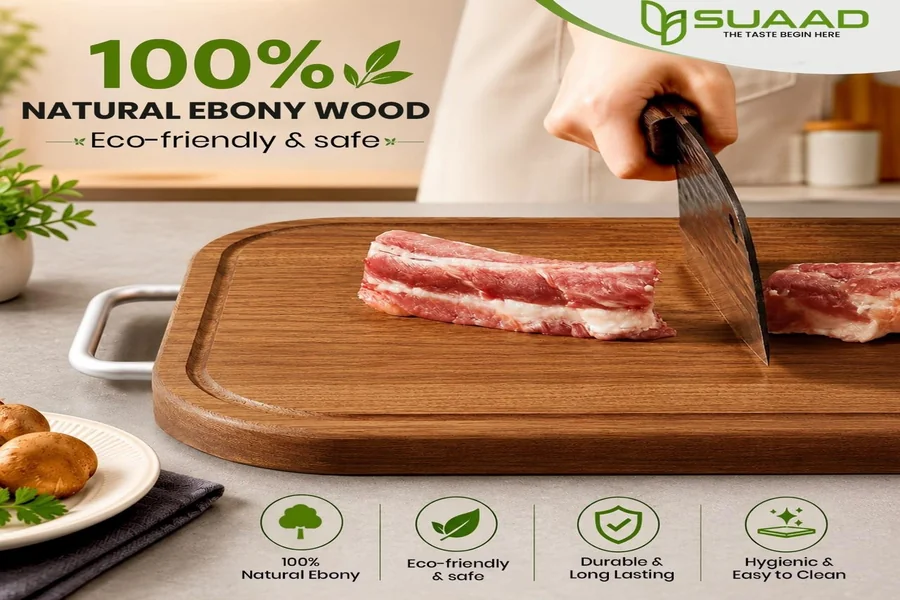
How to Choose the Best Wooden Chopping Board
Choosing the right wooden chopping board depends on your cooking habits, available countertop space, and personal preferences.
Wood type: Acacia is valued for its distinctive grain and attractive appearance. Maple is popular for its fine grain and practical cutting surface, while walnut offers a rich, dark color.
Size and thickness: A small board works well for quick tasks, such as cutting fruit, while a larger board provides more room for preparing complete meals. A thicker board may offer greater stability but can be heavier to move.
Design: Consider whether a traditional board or a double-sided wooden chopping board would better suit your needs. Features such as juice grooves and handles can improve convenience.
Construction: Choose a board with a smooth surface, solid joints, and no visible cracks. A stable board helps make food preparation safer and more comfortable.
Finish: Look for a food-safe finish, such as food-grade mineral oil, and check the manufacturer’s maintenance recommendations.
How to Clean and Maintain a Wooden Chopping Board
Proper care is essential for extending the life of your wooden chopping board. After each use, wash it with warm water and mild dish soap, then rinse and dry it with a clean towel. Allow it to air-dry completely in an upright position.
Avoid soaking the board or placing it in a dishwasher, as excessive heat and moisture can cause warping, splitting, and cracking.
Apply food-grade mineral oil periodically when the wood begins to look dry. A suitable board conditioner can also help maintain the surface. Avoid ordinary cooking oils that may become rancid.
For food safety, clean and sanitize the board appropriately after contact with raw meat, poultry, or seafood. Use separate boards for raw animal products and ready-to-eat foods whenever possible.
Conclusion
A wooden chopping board is a practical, durable, and attractive addition to any kitchen. It provides a reliable surface for everyday food preparation while helping protect knife edges and enhancing your kitchen’s natural style. A double-sided wooden chopping board offers additional versatility and can help organize different cooking tasks. By choosing quality wood, selecting the right design, and following proper cleaning and maintenance practices, you can enjoy the benefits of a wooden chopping board for many years.

Shoaib is a passionate digital creator, blogger, and SEO enthusiast who shares insights about AI tools, blogging, online earning, content strategies, and website growth. Through practical guides and creative ideas, Shoaib helps beginners and creators build successful online platforms and stay updated with the latest digital trends.